























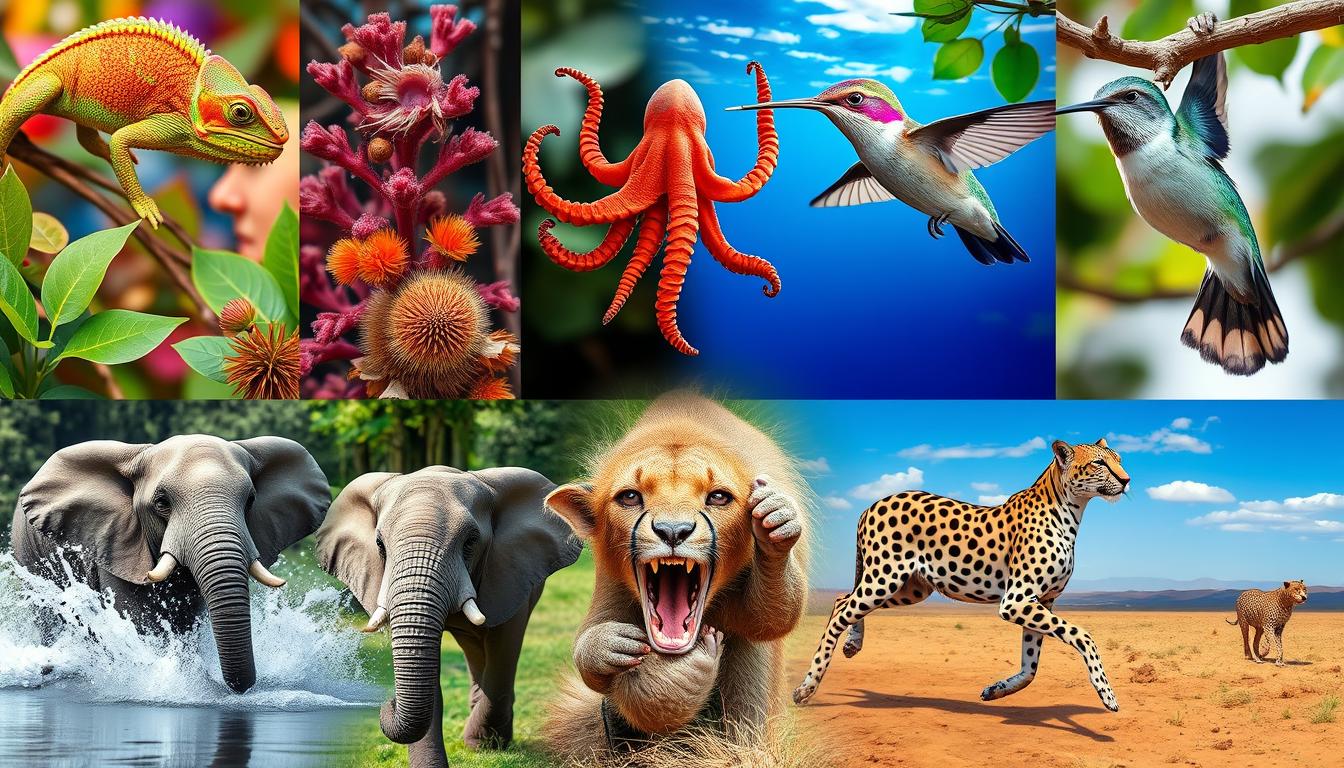
Get ready to be amazed by incredible facts from the animal kingdom. From the lightning-fast cheetah to the long-lived bowhead whale, the natural world is full of amazing facts. These will leave you in awe.
Explore the remarkable adaptations, unique behaviors, and intelligence of creatures. You’ll see both familiar and exotic animals in a new light. Prepare to have your view of the animal world changed as we dive into Animal Facts, Wildlife Information, and Animal Behavior.
Key Takeaways
- Discover the incredible speed and agility of the cheetah, the fastest land animal.
- Learn about the remarkable migration patterns of the Arctic tern, which travels up to 60,000 miles annually.
- Explore the remarkable longevity of the bowhead whale, which can live for over 200 years.
- Understand the unique color-changing abilities of the chameleon and how it adapts to its environment.
- Uncover the surprising problem-solving skills and intelligence of crows, octopuses, and other animals.
Fascinating Facts About the Animal Kingdom
The natural world is full of amazing wonders. Our Zoology Knowledge and Natural History Insights about animal species always amaze us. From the cheetah’s fast sprints to the Arctic tern’s long migrations, the animal kingdom is fascinating.
The Fastest Land Animal: A Cheetah’s Sprint
The cheetah is known for its incredible speed, reaching up to 75 mph (120 km/h). Its fast acceleration and agility let it chase down prey quickly. The cheetah’s light frame and strong muscles help it cover great distances fast, showing nature’s amazing adaptations.
The Longest Migration: Arctic Terns Travel Vast Distances
The Arctic tern migrates an incredible 50,000 to 60,000 miles (80,000 to 96,000 km) each year. This journey between the Arctic and Antarctic is a testament to their resilience. Their ability to navigate such vast distances and adapt to different environments is a true marvel of Natural History Insights.
Lifespan Master: The Bowhead Whale’s Longevity
The bowhead whale can live up to 200 years, making it one of the oldest animals. This Arctic whale’s long life is a remarkable feat of Zoology Knowledge. Its slow metabolism, low predation risk, and ability to survive harsh environments show the incredible adaptations in the animal kingdom.
“The natural world is a constant source of wonder and amazement, with each species revealing new insights into the incredible diversity and adaptability of life on our planet.”
Mind-Blowing Animal Adaptations
The animal kingdom is full of amazing adaptations. Creatures like the chameleon can change color, and Arctic animals have survival tricks. These examples show how animals solve environmental challenges in clever ways.
The Chameleon: Master of Color Change
Chameleons are truly fascinating. They can change their skin color fast, blending into their surroundings. This helps them hide, communicate, and even control their body temperature.
Arctic Animals: Surviving Extreme Cold
Arctic animals live in very cold places. They have thick fur and blubber to stay warm. These features help them survive in icy environments.
Some Species Can Regenerate Lost Limbs
Some animals can grow back lost parts. Salamanders can regrow their tails, and some crabs and starfish can grow back entire limbs. This shows how resilient and adaptable the animal kingdom is.
“Nature is full of genius, full of the divinity; so that not a snowflake escapes its fashioning hand.”
– Henry David Thoreau
The animal world is full of surprises, from chameleons to regenerating species. These amazing adaptations show how animals have found creative ways to live in their environments. They inspire awe and curiosity in all who explore the wonders of biological diversity.
Unusual Animal Behaviors
The animal kingdom is full of fascinating and surprising behaviors. These show the amazing diversity and complexity of nature. From dolphins’ complex communication to various species’ tool use, studying animal behavior reveals their intelligence and adaptability.
Dolphin Communication: More Than Just Whistles
Dolphins are famous for their high-pitched whistles. But they communicate in many ways, including clicks and squeaks. They even have a unique “signature” whistle for each dolphin.
Studies show dolphins can recognize each other’s whistles. This shows they have social awareness and recognition, like humans.
Tool Use in Animals: Beyond Humans
Tool use is seen as a sign of human intelligence. But, many animal behavior studies show other species use tools too. For example, sea otters crack open shellfish with rocks, and elephants use branches to swat flies.
This wildlife information shows these animals’ cognitive abilities. It challenges the idea that tool use is only human.
The Mating Dance of the Bird of Paradise
The mating rituals of the bird of paradise are truly amazing. These colorful birds perform elaborate dances to attract mates. They show off their stunning plumage and build display platforms.
This animal behavior shows the natural world’s creativity and complexity. It’s a testament to the beauty and diversity of life.
These examples show how adaptable and intelligent animals are. By studying wildlife information like this, we learn more about the animal kingdom’s diversity and complexity.

“The more I learn about the world, the more I realize how little I know about it.” – David Attenborough
Incredible Animal Intelligence
In the world of Animal Behavior and Zoology, some species show amazing intelligence. Elephants show deep emotions and remember a lot. Crows solve problems and octopuses are experts at hiding and escaping.
Elephants: Emotional Awareness and Memory
Elephants are known for their complex social and emotional lives. They understand their own feelings and those of their herd. They show empathy, grief, and remember voices and faces of others for years.
Crows: The Problem-Solving Geniuses
Crows are very smart birds. They use tools, remember faces, and solve puzzles. Their intelligence is like that of young children, showing how smart they are.
Octopuses: Masters of Escape and Camouflage
Octopuses are incredible in Animal Behavior and Zoology Knowledge. They can escape and change color to hide. They even use tools like coconut shells to build shelters.
These examples show us how smart animals can be. They challenge what we thought we knew. As we learn more about Animal Behavior and Zoology Knowledge, we’ll keep being amazed by animal intelligence.
Amazing Animal Lifespans
The natural world is full of Animal Facts and Natural History Insights. One of the most fascinating things is the long lives of some creatures. From the immortal jellyfish to the long-lived tortoise, there are amazing examples of longevity.
The Immortal Jellyfish and Its Unique Life Cycle
The Turritopsis dohrnii, or immortal jellyfish, can live forever. It can turn back into a younger form after growing up. This lets it avoid aging and start over, making it potentially immortal.
Tortoises: Long-Lasting Companions
Tortoises are known for living a long time, with some over a century old. The Galápagos tortoise can live up to 150 years. Their slow pace and strong bodies help them live long lives.
Greenland Sharks: Deep Sea Dwellers
The Greenland shark lives in the cold, dark Arctic waters. It can live for centuries, with some over 400 years old. Its slow growth and low activity help it live so long, making it one of the longest-lived vertebrates.

“The Greenland shark is a true marvel of nature, an ancient predator that has survived for centuries in the unforgiving depths of the Arctic.”
These examples show the amazing Animal Facts and Natural History Insights in the animal kingdom. From the immortal jellyfish to the long-lived tortoise and the Greenland shark, nature’s diversity in lifespan is truly inspiring.
Uncommon Animal Partnerships
The natural world is full of fascinating interdependencies and symbiotic relationships. These show the Animal Behavior and Biological Diversity in our ecosystems. We’ll look at three remarkable examples of uncommon animal partnerships that show the intricate balance of life.
Cleaner Wrasse and Reef Fish: A Mutual Benefit
On coral reefs, a unique partnership exists between the cleaner wrasse and reef fish. These small, colorful wrasse fish remove parasites and dead skin from the bodies of larger fish. In return, the reef fish give the wrasse food and protection from predators.
This arrangement helps both species thrive. It shows how Biological Diversity is key to healthy ecosystems.
Leafcutter Ants: Farming Fungus for Food
- Leafcutter ants are remarkable for their agricultural practices, which are unparalleled in the insect world.
- These industrious ants harvest leaves from the rainforest and use them to cultivate a specific fungus species that serves as their primary food source.
- The ants carefully tend to their “fungus gardens,” ensuring the optimal growth conditions for their crop, demonstrating a level of Animal Behavior that rivals human farming techniques.
Clownfish and Sea Anemones: A Protective Bond
The vibrant and playful clownfish have formed a unique partnership with the stinging sea anemones. Clownfish live safely among the anemone’s venomous tentacles, which protect them from predators. In return, the clownfish provide the anemone with nutrients and help to keep its tentacles clean.
This remarkable Biological Diversity shows the interconnectedness of life in marine ecosystems.
“The natural world is full of incredible examples of symbiotic relationships and Animal Behavior that defy our expectations. These partnerships illustrate the beauty and complexity of our planet’s Biological Diversity.”
Unusual Animal Defense Mechanisms
In the animal kingdom, creatures have evolved many defense mechanisms. From the skunk’s spray to the pufferfish’s inflation, these show nature’s ingenuity. Let’s look at some fascinating examples of unusual animal defense mechanisms.
Skunks: Nature’s Defensive Spray
Skunks are known for their black-and-white stripes and foul-smelling spray. This spray, from special glands, can hit its mark with great accuracy. It can cause temporary blindness and burning in the eyes of predators. The skunk’s spray is a powerful way to keep predators away and ensure its survival.
Pufferfish: Inflation as an Escape
Pufferfish can quickly inflate their bodies to become almost round. This makes them look bigger and more intimidating to predators. The inflated pufferfish also releases a toxic substance, further deterring predators.
Monarch Butterflies: Toxicity as Protection
The orange and black wings of monarch butterflies warn predators. These butterflies get toxins from milkweed plants, making them unpalatable and poisonous. This chemical defense ensures the monarchs’ survival, as predators learn to avoid them.
Nature has given animals incredible defense strategies, showing the animal kingdom’s adaptability and resourcefulness. By understanding these unique mechanisms, we appreciate the intricate web of life and how species have evolved to thrive.

Strange Animal Cultures
The natural world is full of amazing animal behaviors and social structures. Some species have complex social cultures that show the depth of Animal Behavior and Zoology Knowledge. Let’s look at some examples of these strange and fascinating animal societies.
Orcas: The Pod’s Unique Hunting Techniques
Orcas, or killer whales, are smart and social marine mammals. They live in family groups called “pods.” Each pod has its own hunting ways passed down through generations.
Some pods herd and beach their prey together. Others use special sounds to coordinate their attacks. This shows their advanced Animal Behavior and Zoology Knowledge.
Naked Mole Rats: Eusocial Living
Naked mole rats live in underground colonies with a unique social structure. They have a single breeding female (the “queen”) and a group of non-reproducing workers. The colony works together to maintain the nest, care for the young, and gather food.
This shows a level of Animal Behavior and Zoology Knowledge usually seen in insects like ants and bees.
Meerkats: Social Structures and Responsibilities
- Meerkats live in tight-knit family groups with a clear hierarchy and division of responsibilities.
- The dominant pair are the only ones allowed to breed, while the rest of the group acts as sentries, babysitters, and foragers.
- This complex social structure, including the careful teaching of essential skills to the young, demonstrates the advanced Animal Behavior and Zoology Knowledge of these charismatic creatures.
These examples of unique animal cultures and social organizations show the fascinating depths of Animal Behavior and Zoology Knowledge in the natural world. By studying these complex behaviors, we can learn more about the remarkable adaptations and capabilities of our fellow earthly inhabitants.
Incredible Physical Abilities
The natural world is full of amazing animals. Each one has special physical skills that amaze us. From hummingbirds flying to geckos climbing, nature shows us incredible adaptations.
Hummingbirds: Incredible Flight Mechanics
Hummingbirds are the smallest birds but their flying skills are incredible. They can hover, fly backward, and even upside down. Their wings flap up to 80 times a second, making them fast and agile in the air.
Seahorses: Unique Reproductive Roles
Seahorses are unique in the Animal Kingdom. They challenge traditional gender roles. It’s the male seahorse that carries and gives birth to the young, a fascinating adaptation.
“The male seahorse has a specialized pouch on its belly where the female deposits her eggs. The male then fertilizes the eggs and carries them until they hatch.”
Geckos: Sticky Feet and Climbing Skills
Geckos can climb walls and even walk on ceilings. Their feet have tiny hair-like structures that help them stick to surfaces. This skill is amazing to biologists and nature lovers.
These examples show the incredible physical abilities in the Animal Kingdom. From hummingbirds flying to seahorses’ unique birth roles and geckos’ sticky feet, nature amazes and inspires us.
Extreme Animal Survivors
The Animal Kingdom is full of amazing creatures that can survive in extreme places. From tiny tardigrades to the tough Antarctic icefish, these stories will amaze you. They show how nature can be incredibly resilient.
The Tardigrade: Surviving Extreme Environments
Tardigrades, also called “water bears,” are small animals that can handle very harsh conditions. These microscopic marvels can survive extreme temperatures, radiation, and even space. They can stop their metabolism to survive stresses that would kill others.
The Resilience of Cockroaches
Cockroaches are known for their toughness. They can live in many places, from rainforests to city homes. Their strong bodies, ability to go without food, and resistance to radiation make them very durable.
Antarctic Icefish: Surviving in Bone-Chilling Waters
The Antarctic icefish is a remarkable creature. It lives in the cold waters of the Southern Ocean, where it’s as cold as -1.9°C (28.6°F). Icefish have special features, like antifreeze proteins and no red blood cells, to survive in this cold.
“Nature is full of marvels, and these animal survivors are a testament to the incredible adaptability and resilience of life on our planet.”
Little-Known Animal Facts
In the world of Exotic Creature Profiles and Wildlife Information, there are many hidden facts. We’ll explore the secret lives of sloths, the strange world of axolotls, and the special traits of the platypus.
The Secret Lives of Sloths
Sloths are often seen as lazy, but they have many surprising behaviors. They can hold their breath for up to 40 minutes, which helps them save energy in the trees. They can also turn their heads up to 270 degrees, making it easy to look around without moving much.
The Bizarre World of Axolotls
Axolotls are known for their amazing ability to regrow lost limbs, organs, and even parts of their brain. This makes them very interesting to scientists, who hope to learn from their regenerative powers. They could help in medicine and tissue engineering.
Unique Traits of the Platypus
The platypus is a unique creature with many special features. It is one of the few venomous mammals, with a venomous spur on its hind legs. It is also the only mammal that lays eggs, showing its special evolutionary path.
Learning about sloths, axolotls, and platypuses gives us a peek into the amazing world of Exotic Creature Profiles and Wildlife Information. By discovering their hidden sides, we can better appreciate the wonders of nature and the incredible variety of life on Earth.
“The more I learn about the universe, the more I find myself in awe of the complexity and beauty of nature.”
Fun Facts About Household Pets
Dogs, cats, and birds are popular pets, but they have amazing qualities. Dogs have a strong sense of smell and can understand emotions. Cats purr for many reasons, showing their unique nature. These pets offer interesting insights into their lives.
Dogs: The Power of Smell and Emotions
Dogs have a sense of smell 100,000 times stronger than humans. They can pick up on scents and even sense their owner’s mood. Dogs are known for their loyalty and ability to understand human emotions.
Cats: Why They Purr and Their Behavior
Cats purr to show happiness or stress. They purr when they’re relaxed or seeking attention. Cats also have special behaviors like kneading, showing their complex nature.
Birds: Social Creatures with Unique Talents
Pet birds like parrots are very social and bond strongly with owners. They can learn to talk and solve problems. Some birds, like canaries, sing beautiful songs, bringing joy to their owners.