


























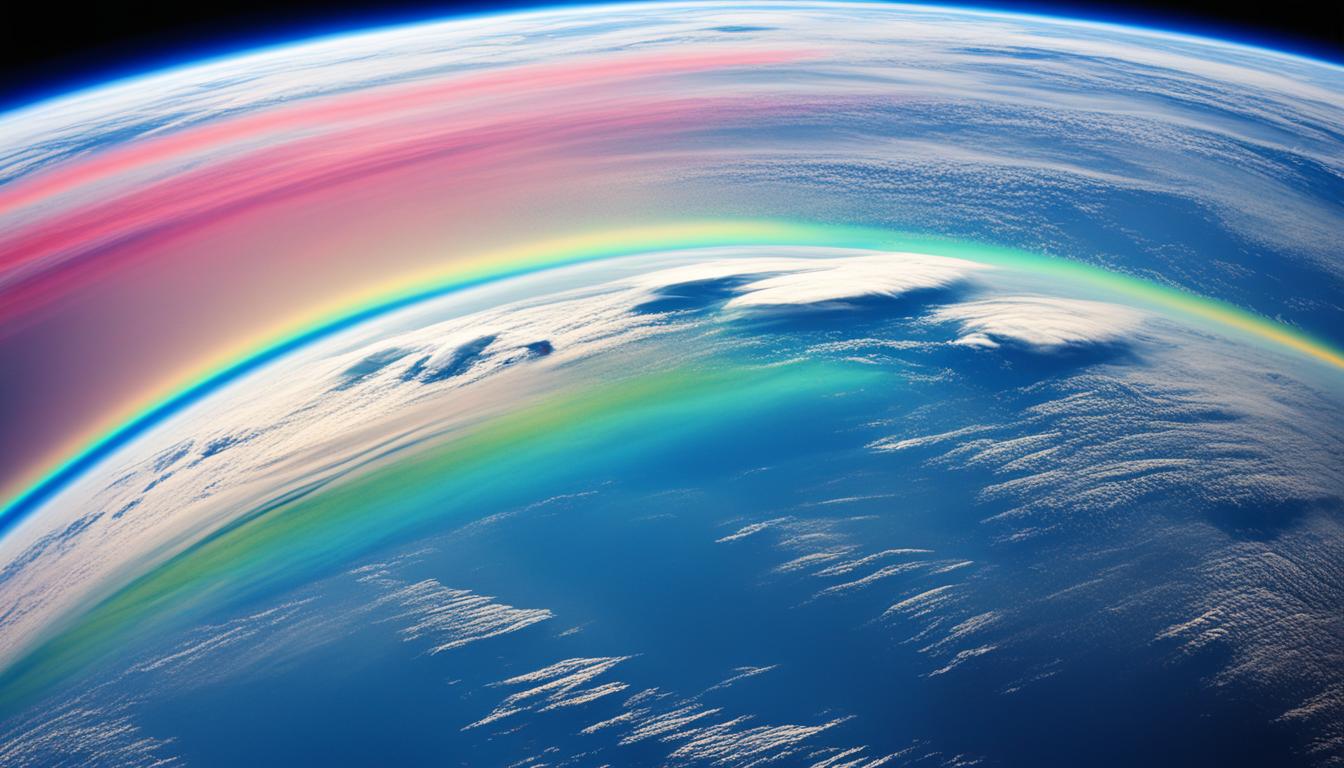
Earth’s atmosphere is a complex and amazing layer of gases that surrounds our planet. It makes life possible. It’s full of surprises and plays a key role in our world. Let’s dive into 10 fun and interesting facts about this vital part of our planet.
Did you know the atmosphere isn’t the same everywhere on Earth? It’s thickest near the equator and thinnest at the poles. This happens because of Earth’s spin and the differences in temperature and pressure at these places.
The atmosphere is a mix of gases, with nitrogen and oxygen being the main ones. But it also has argon, carbon dioxide, and water vapor in smaller amounts. Each gas is important for keeping our planet balanced.
The atmosphere protects us from harmful solar radiation. The ozone layer in the stratosphere blocks a lot of the sun’s harmful ultraviolet rays. This keeps us safe from their damaging effects.
Have you ever noticed how the sky looks different during the day? This is because of sunlight scattering by gases in the atmosphere. This is called Rayleigh scattering. It makes the sky look blue to us.
These are just a few of the many cool facts about Earth’s atmosphere. Let’s explore more about this vital layer of our planet. We’ll see how it shapes our world in amazing ways.
Earth’s Atmospheric Layers
The Earth’s atmosphere is made up of several layers, each with its own special features and roles. Knowing about these layers helps us understand how our planet supports life.
Troposphere: The Breathing Zone
The troposphere is the lowest layer, going from the ground up to about 6 to 20 kilometers high. This is where we live and breathe. It’s also where most weather happens, like clouds, rain, and wind.
The temperature in the troposphere gets colder as you go up. This makes it a great place for humans to live.
Stratosphere: The Ozone Guardian
Right above the troposphere is the stratosphere, stretching up to about 50 kilometers high. This layer is key for life on Earth because it has the ozone layer. The ozone layer protects us from the sun’s harmful UV rays.
The stratosphere also has a stable temperature that gets warmer as you go up. This is because the ozone layer absorbs UV radiation.
The troposphere and stratosphere work together to keep our planet healthy. They make sure the conditions are right for life to exist.
Fun Facts About Atmospheric Pressure
Atmospheric pressure is an unseen force that surrounds us. It’s a key part of our planet’s atmosphere. This force affects everything from the weather to our daily activities. Let’s explore some interesting facts about atmospheric pressure.
Did you know that atmospheric pressure changes a lot around the world? At sea level, it’s about 14.7 pounds per square inch (psi). But, it can be very different in other places. For example, at the top of Mount Everest, it’s only about one-third of sea level pressure. This makes breathing hard for climbers.
Atmospheric pressure also plays a big role in the weather. High-pressure systems mean clear skies and stable weather. Low-pressure systems can bring clouds, rain, and storms. By watching pressure changes, weather forecasters can predict the weather better.
But atmospheric pressure isn’t just about the weather. Divers need to watch out for pressure changes underwater. Going deeper increases the pressure, which can harm their lungs if they come up too fast. It also changes how water boils, making cooking harder at high elevations.
So, the force of atmospheric pressure is much more important than we think. Learning about air pressure helps us understand our planet better. It shows us how the atmosphere shapes our world.
The Incredible Winds of Our Planet
Our planet’s atmosphere is always moving, with winds going around the globe. These winds have fast-moving air currents called jet streams. They act like high-altitude “highways” for weather and planes. Knowing about jet streams helps us understand our weather and climate.
Jet Streams: Nature’s Air Highways
Jet streams are strong winds found high up, between 8 and 15 kilometers (5 to 9 miles) above us. They can go over 250 kilometers (150 miles) per hour. This makes them key to our weather and climate.
They form from the difference in temperature between warm tropical air and cooler air at the poles. Jet streams move high and low-pressure systems. This is crucial for weather patterns.
The strength and path of jet streams affect our weather. Strong, straight jet streams move weather systems fast across continents. But if they bend, weather can stay the same for a long time, causing unusual weather like heat waves or heavy rain.
Knowing about atmospheric winds, especially jet streams, helps predict weather. By studying these high-altitude paths, scientists can better understand our weather and climate. This helps us prepare for weather challenges.
Atmospheric Optics: Nature’s Light Show
The Earth’s atmosphere is like a canvas for nature’s stunning light shows. Rainbows are a prime example, a colorful arc that has amazed people for ages. They show how light and the atmosphere work together in amazing ways.
Rainbows: Colorful Atmospheric Phenomena
Rainbows happen when sunlight goes through water droplets in the air. This bending and spreading of light creates the colorful arc we see. The colors go from red on the outside to violet inside.
The way we see a rainbow depends on where we are, the sun’s position, and the water droplets. Rainbows appear at a 42-degree angle from us to the sun. This angle makes the arc shape we all know.

But rainbows aren’t the only light show in the sky. The atmosphere can create sun dogs, halos, and mirages too. These happen when light meets different things in the air, like water vapor or ice crystals.
Fun Facts About Atmospheric Gases
The Earth’s atmosphere is full of gases, each crucial for life. One key fact is the big role of nitrogen, often less known than oxygen.
Nitrogen: The Unsung Hero
Nitrogen is the most common gas in our air, making up 78% of it. But, it’s often ignored, unlike oxygen. Nitrogen is vital for our planet, though its role is often missed.
It’s key for plant growth and helps control Earth’s temperature. Nitrogen also supports the nitrogen cycle, essential for all life.
Oxygen might get more attention, but nitrogen is what makes our atmosphere special. Without it, life as we know it wouldn’t exist.
Our atmosphere also has other gases, each playing a part in keeping our planet balanced. From carbon dioxide, which helps control temperature, to rare gases like argon and neon, the mix of gases is amazing.
Clouds: Nature’s Fluffy Masterpieces
The Earth’s sky is a canvas for ever-changing, captivating clouds. These formations are made of water vapor in the air. They come in many shapes and types, each a unique piece of nature’s art. Learning about these clouds helps us understand our planet’s weather and climate.
Clouds are key in the water cycle, connecting the Earth to the sky. Warm air rises, cools, and makes water vapor condense into clouds. Different clouds, like cumulus, stratus, and cirrus, tell us about the weather now and what’s coming.

Cumulus clouds look like big, fluffy cotton balls and often mean good weather. But dark cumulonimbus clouds might signal a storm. Cirrus clouds, high up and feathery, can warn of a warm front.
Knowing about different clouds and their weather signs helps us appreciate the Earth’s atmosphere and water cycle. From huge thunderheads to thin cirrus, clouds are amazing and fascinating.
The Atmosphere’s Role in Weather
The Earth’s atmosphere is complex and dynamic, playing a key role in shaping our weather. It includes temperature, humidity, and pressure, which work together to create different weather phenomena. This includes the amazing thunderstorms that bring lightning, strong winds, and heavy rain.
Thunderstorms: Nature’s Electrifying Displays
Thunderstorms are awe-inspiring, showing the Earth’s atmosphere’s power. They start when warm, moist air rises and meets cooler air, forming tall cumulonimbus clouds. As the air keeps rising, water droplets and ice crystals collide, creating static electricity. This electricity then releases as lightning.
Lightning bolts across the sky show the storm’s intense conditions. When lightning strikes, it heats the air around it, making it expand quickly. This creates the sound we call thunder. Thunderstorms can also bring strong winds, heavy rain, and hail. These are all due to the complex mix of temperature, humidity, and pressure in the atmosphere.
Knowing what causes thunderstorms helps us predict and prepare for them. By studying the atmosphere and its parts, scientists can forecast thunderstorm formation and behavior. This helps keep communities safe and informed.
Fun Facts About the Atmosphere’s History
The Earth’s atmosphere has changed a lot over billions of years. It started with gases like hydrogen and helium, but now it’s mostly oxygen. This change is both interesting and complex.
Life on Earth has played a big role in changing the atmosphere. Early plants and bacteria that make oxygen increased the air’s oxygen levels. This led to the creation of the ozone layer and the balanced air we have now.
Big events like volcanoes, meteor impacts, and continents moving have also changed the atmosphere. These events changed the air’s makeup, temperature, and how it moves. Sometimes, these changes had big effects on life on Earth.